
Packaging you
don’t throw away
after one shipment.
Returnable dividers, layer pads, boxes and inserts, fabricated from our own twin‑wall polypropylene sheet in Bulgaria — built to your part and reused trip after trip instead of once.
Extruding and fabricating in Bulgaria since 2008 · Automotive · Electronics · Furniture
What we make
From plain sheet to finished packaging.
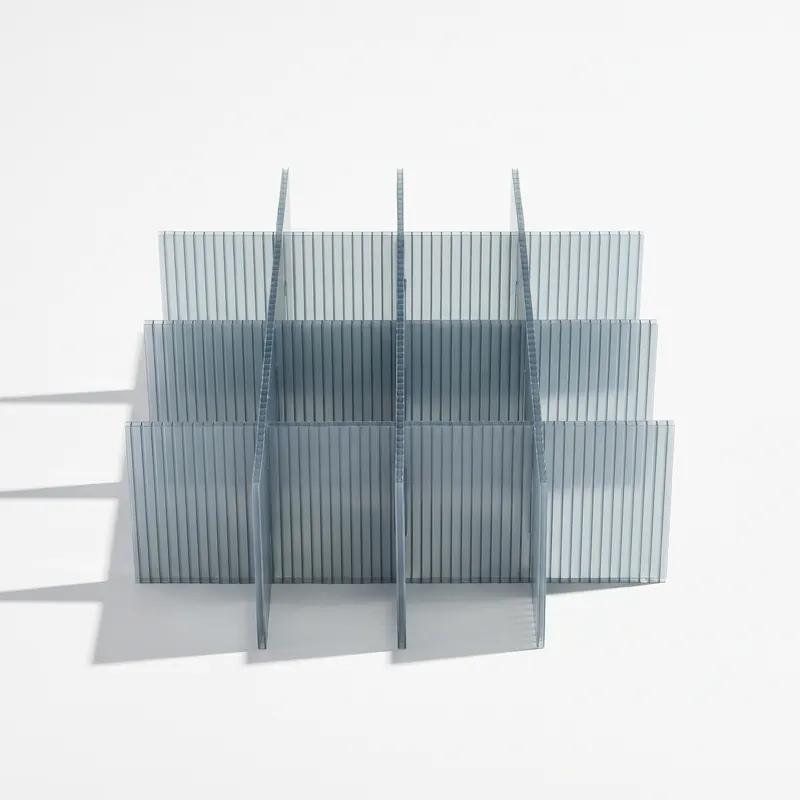
Returnable dividers and inserts
Cellular dunnage, cut and slotted or welded, sized to your part. The direct replacement for cardboard partitions.
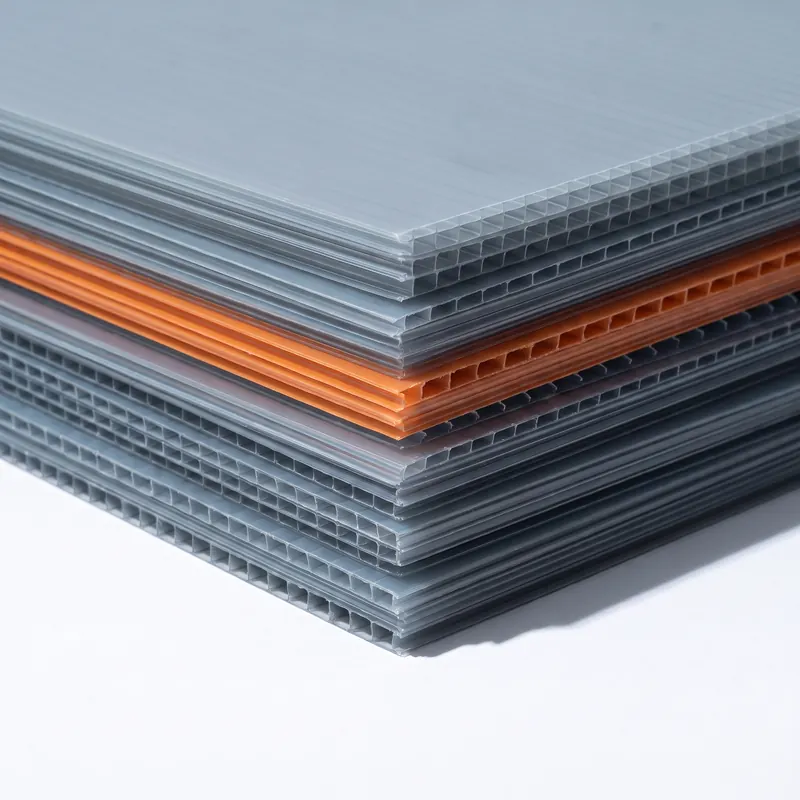
Layer pads
Flat separators for palletised and containerised loads, cut to size.
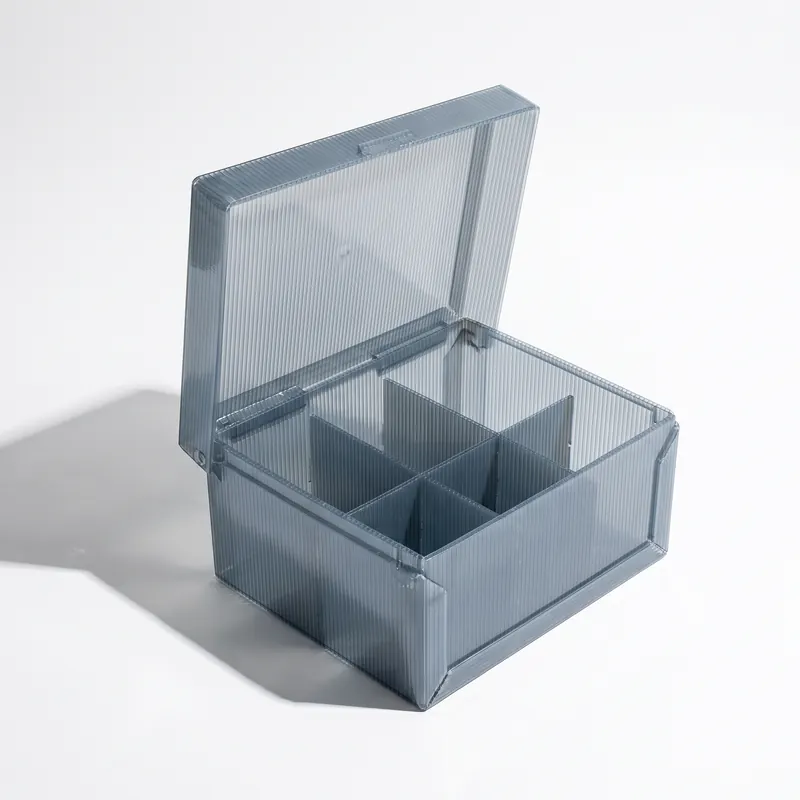
Returnable boxes and sleeve packs
Folding or rigid PP containers with lid, base and divider system. Stackable, washable.
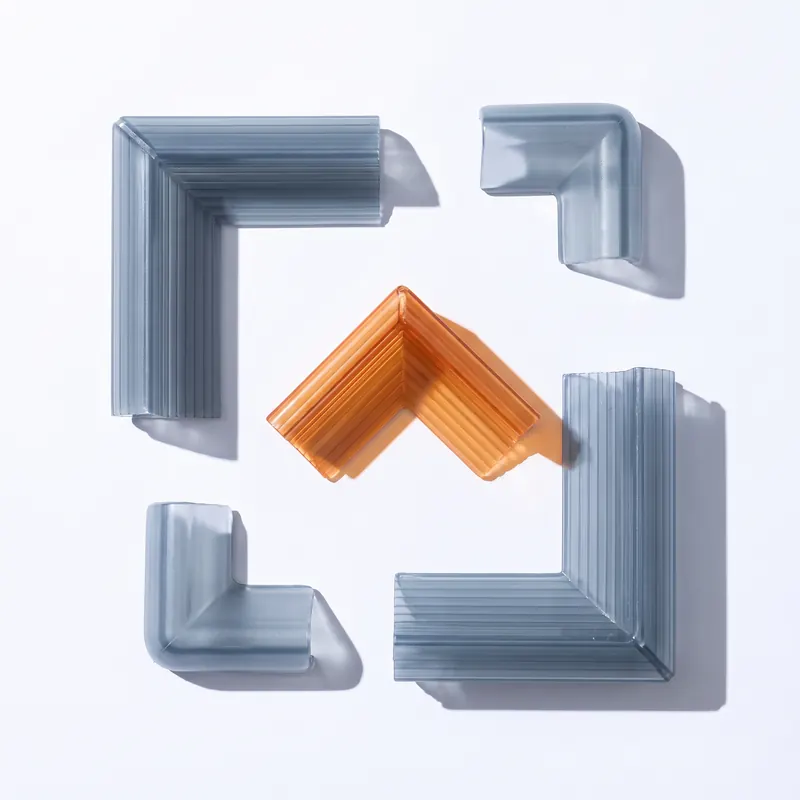
Protective covers and custom fabrication
Edge and corner protection, surface protection, machine covers. If it can be cut, scored, welded or riveted from twin-wall sheet, we make it.
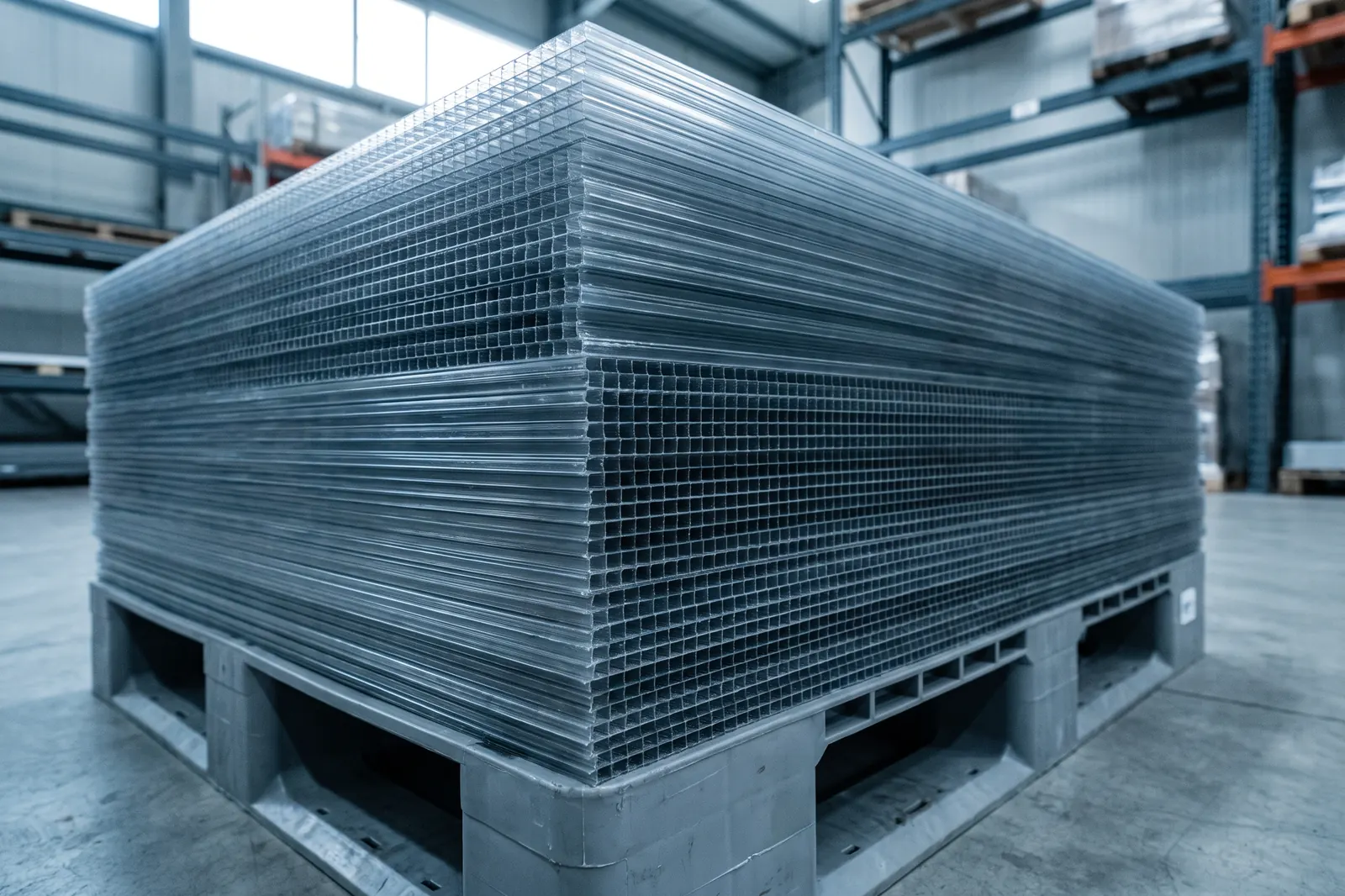
Plain twin-wall sheet
By the pallet, in the grades below, if you fabricate in-house.
The problem — and the deadline
Cardboard is the cheapest packaging you’ll ever buy, and the most expensive you’ll ever use.
You pay for it. You use it once. You pay to dispose of it. Next shipment, you buy it again — and somewhere in that loop a divider crushes and a part arrives damaged.
There’s now a date attached. Under the EU Packaging and Packaging Waste Regulation, transport and industrial packaging must meet reuse targets from 1 January 2030, rising again by 2040. If you supply an OEM, this is already appearing in your supplier audits.
Fair question.
“But cardboard is recyclable and plastic isn’t green.”
Cardboard is recyclable — once. Then it’s pulped and you buy new. A PP divider set is recyclable too, but at the end of a working life rather than at the end of one shipment.
Which one has the lower footprint depends on one thing: how many trips. Past the first handful, reusable wins on material, on transport weight and on waste — and it keeps winning every trip after that.
We won’t put a generic number here. Send us your part and how often it ships, and we’ll show you the crossover point for your case.
What changes
One set of packaging. Every trip.
Buy it once, not every shipment
Cardboard is a line on every order. A PP set is a line on one. Divide it by the trips it survives and compare that with what you spend on cardboard in a year — before disposal, before damaged parts. We’ll put your own numbers to it in the quote.
Built to your part
We fabricate to your drawing, your part, or a sample you send. Cells sized to the component, so nothing shifts.
Made here, not imported
Our extruder, our fabrication line, one address in Bulgaria. Short lead times from an approved sample, small minimum orders, and someone who picks up the phone when the spec changes.
Recyclable when it’s finally worn
Mono-material polypropylene, back into the PP stream, with nothing to separate out first.

Olimpmir has manufactured polypropylene hollow sheet in Bulgaria since 2008. No agents, no reselling. You deal with the people who make it.
Material and development
We work the material out with you, not from a catalogue.
- Our own extrusion
- The sheet is made here, so the grade follows the part rather than the other way round. Thickness, weight, colour and finish are set by what the job has to survive.
- A laboratory behind it
- We work with polymers and we test them. Batches are analysed in our own lab, so what leaves the factory is what was agreed — and stays that way on the tenth order as much as the first.
- Development with the partner
- As a production partner we go into the detail with you: the part, the line, the handling, what has gone wrong before. Then we build the right product at the quality you asked for.
- Fabrication in house
- Cutting, scoring, welding, riveting, hinging — done on our own line, so a change to the design does not mean a change of supplier.
Bring us the problem rather than a specification. Working it out is the part we are good at.
How it works
From your part to your packaging in four steps.
01
Send us the part.
Drawing, photo, dimensions or the physical piece. Tell us how it ships today and what goes wrong.
02
We design, quote and sample.
A proposed design, a price per unit and per trip, and a physical sample to load-test with your real parts.
03
Production.
Into production as soon as you approve the sample.
04
Reorder only when worn.
When a set has finally had enough, replace the individual pieces or the whole set.
Questions
Cardboard is cheaper per piece. How does this add up?
Per piece, yes. Over a year of shipments, no — one set replaces every cardboard order in that period. We show the comparison for your part, with your volumes, in every quote.
Can I test before I commit?
Yes. Every fabricated project starts with a physical sample you load with your own parts.
What’s the minimum order?
Smaller than most people expect, and we run trial quantities before a full order. Tell us the volume you have in mind and we’ll tell you what works.
What happens when it wears out?
It’s mono-material PP — standard recycling stream. If you would rather not deal with it yourself, ask us when the time comes.
Get a quote